
In this guide · 7 sections
There are two completely different problems hiding inside “we need more teams,” and organizers who confuse them burn a lot of energy in the wrong place. Season one is a recruiting problem: you have no teams and no reputation. Season three is a retention problem: you have plenty of both, and you're quietly losing a third of your teams a year without knowing why.
They need different tactics, different metrics, and — importantly — different amounts of your time. Recruiting is loud and one-time. Retention is quiet and compounding, and it's where the leagues that last make their living.
Season oneThe cold start problem
A brand-new league has nothing to point to: no photos, no standings, no “my buddy played last season and loved it.” That's the whole difficulty, and it means your first eight teams come from trust you already have, not from marketing you do.
Nobody joins an empty league. Your first job isn't to advertise — it's to make the league look inevitable before it exists.
Get to eight before you go public
Line up a committed core privately before you announce anything. Message the captains you already know, the pickup groups you already play with, the coworkers who've said “we should start a team.” Get four to six soft commitments in a chat before there's a registration page. Then when you launch, you launch a league that's already 60% full — which is a completely different pitch than launching an empty one.
Season oneWhere teams actually come from
Recruiting advice usually jumps straight to social media, which is roughly the least effective channel for a local rec league. Here's where teams actually come from, ranked by how well it works:
| Channel | Effort | Effectiveness | Notes |
|---|---|---|---|
| Your own network | Low | Highest | The first 4–6 teams, every time |
| Existing pickup groups | Low | High | Whole teams, already organized |
| Referrals from committed teams | Low | High | Ask directly; give them a reason |
| Facility bulletin / drop-in nights | Medium | Medium | Where the players already are |
| Local Facebook groups | Medium | Medium | Neighborhood and sport-specific ones |
| Company / org teams | Medium | Medium-High | One email gets a whole team |
| Flyers at the gym/court | Low | Low-Medium | A QR code to the league page or nothing |
| Paid social ads | High | Low | Rarely worth it at local scale |
The pattern: warm, local, and team-shaped beats cold, broad, and individual — almost every time, for almost every league.
The referral ask that works
“Tell your friends” does nothing. A specific ask with a specific reason works: “We've got room for two more teams — if you know a group, send them this link and you both get $20 off next season.” Specific number, specific link, specific incentive, aimed at people who already trust the asker.
The pitchYour league page is the pitch
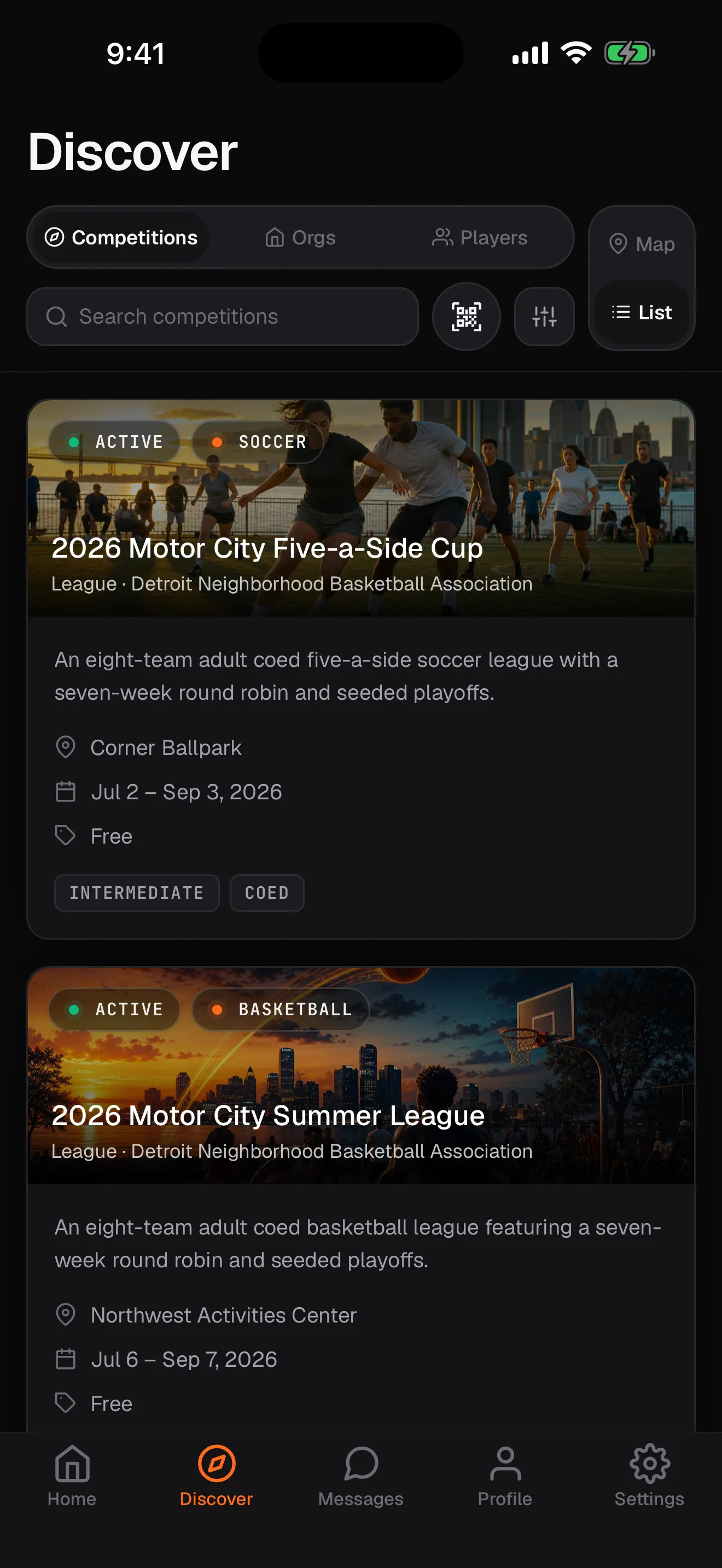
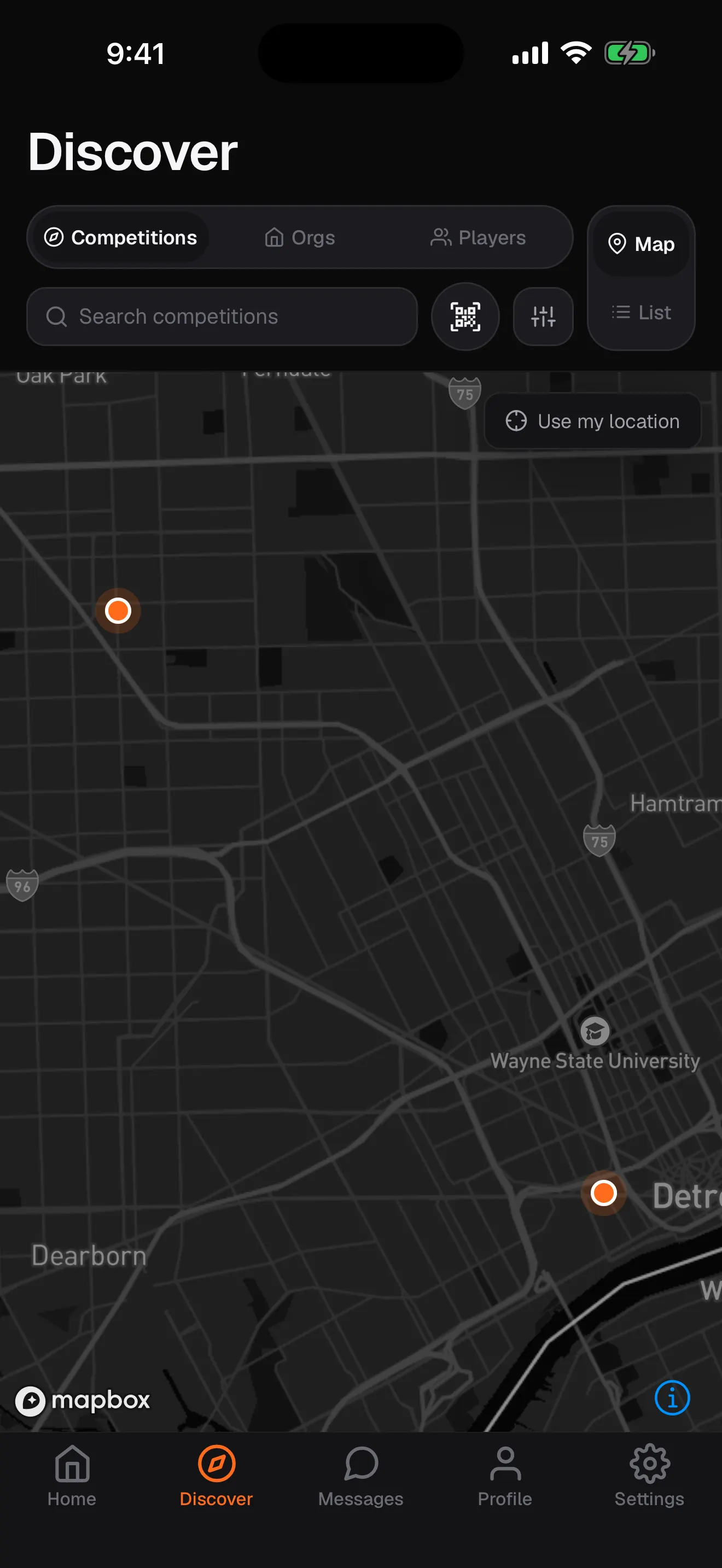
Every recruiting channel dumps people onto one page. If that page doesn't answer their questions in fifteen seconds, all the recruiting upstream was wasted. It's the highest-leverage thing to get right and the most commonly neglected.
What a person deciding whether to join needs, above the fold:
- What sport, what format, what skill level — in the first line.
- When and where: the night, the time, the venue, on a map.
- The price, and what it includes.
- How many spots are left, or when registration closes — urgency that's actually true.
- What it looks like: a photo, a standings table, anything that proves it's real.
- One button. Register. Not 'contact us', not 'learn more'.
Season oneFix the funnel, not the flyer
When recruiting underperforms, the instinct is to make more noise — another post, another flyer. Usually the leak isn't at the top of the funnel; it's in the middle, where interested people fail to become registered ones.
Ten more flyers can't fix a page that loses 70% of the people who already clicked. Find the biggest leak and fix that one first.
Season threeRetention math
Here's the shift that separates leagues that grow from leagues that tread water: after season two, your growth is dominated by how many teams come back, not how many you find. Retention is a multiplier on everything, and it's invisible until you do the arithmetic.
What retention actually costs you
InteractiveEvery point of retention you win is a team you never have to go find. Move this slider from 60% to 80% and watch the recruiting number roughly halve.
every single season3
That's 12 teams of recruiting across 4 seasons just to stay the same size.
Play with that. At 60% retention on a 10-team league you're recruiting four brand-new teams every single season just to stand still. Get to 80% and it's two. That difference — two teams of recruiting versus four, forever — is the entire ballgame, and it's won with things that cost almost nothing.
What actually retains teams
- Competitive games.The number one reason teams don't come back is getting blown out every week. Balanced divisions retain better than any perk.
- It ran smoothly.Games started on time, the schedule didn't change by text, standings were current. Reliability is a feature and players feel its absence more than its presence.
- Stats and a record.People come back for the story — their points, their team's standing, the rivalry. A league that remembers last season gives them a reason to write the next chapter.
- It felt like something. A champion, an all-league team, a photo, a moment. The leagues people rejoin are the ones that felt like more than a gym booking.
Live standings, per-player stats and trends, game film, and season history — the record that turns a one-off season into a rivalry worth re-signing for.
Season threeThe re-signup window
Retention isn't only about the season being good. It's about asking for the re-signup at the exact moment the season felt best — and that moment is smaller than you think.
- Open next season on championship night. The room is full of people who just had a great time. This is the single highest-converting recruiting moment you will ever have, and it costs you nothing but timing.
- Offer a returning-team discount with a deadline.A small discount that expires in two weeks converts “maybe next season” into a payment while the goodwill is still warm.
- Let captains re-register the whole team in one click. The team already exists in your system. Re-signing should be confirming a roster, not filling out a form from scratch.
- Follow up within 48 hours. Results, a photo, and the re-signup link in one message the day after the final. Wait a week and the emotional peak is gone.
Track itThe four numbers to track
You can't improve what you don't look at, and most organizers look at exactly one number — how many teams signed up. Track four and you'll know which problem you actually have this season.
| Metric | How to read it | Do something when |
|---|---|---|
| Teams this season | Raw size | It's your top-line goal |
| Retention rate | Returning ÷ last season's teams | Below 70% — fix the product, not the funnel |
| Registration conversion | Paid ÷ page visits | Below ~20% — the page or flow is leaking |
| Free-agent placement time | Signup → assigned to a team | Over 48 hours — you're losing solos |
Retention below 70% is a season-quality problem. Conversion below 20% is a page-and-payment problem. They have completely different fixes — the numbers tell you which.
The mechanics under all of this — pricing the re-signup discount, taking the deposit, structuring the fee — are in what to charge and how to collect it, and a league that runs smoothly enough to retain teams starts with a schedule that holds.
Loose endsGrowth questions organizers ask
How long before I know if a league will work?
Should I run a waitlist?
What's the best incentive for referrals?
How do I compete with an established league nearby?
My league shrank this year. What do I do?
The short version
- Season one is recruiting; season three is retention. Different problems, different fixes.
- Line up your first 4–6 teams privately before you launch — nobody joins an empty league.
- Teams come from warm, local, team-shaped channels — not paid ads.
- When recruiting underperforms, find the biggest funnel leak and fix that, not the flyer.
- Keeping a team is ~5× cheaper than finding one; retention is a multiplier on everything.
- Open next season's registration on championship night, while the room is full.
- Track four numbers — size, retention, conversion, placement time — so you know which problem you have.